
The wrong size is the number one reason a harness ends up returned or in a drawer. Enter two measurements and we tell you which ones actually fit, brand by brand, with the range in centimetres each manufacturer publishes.
How to measure your dog in two minutes
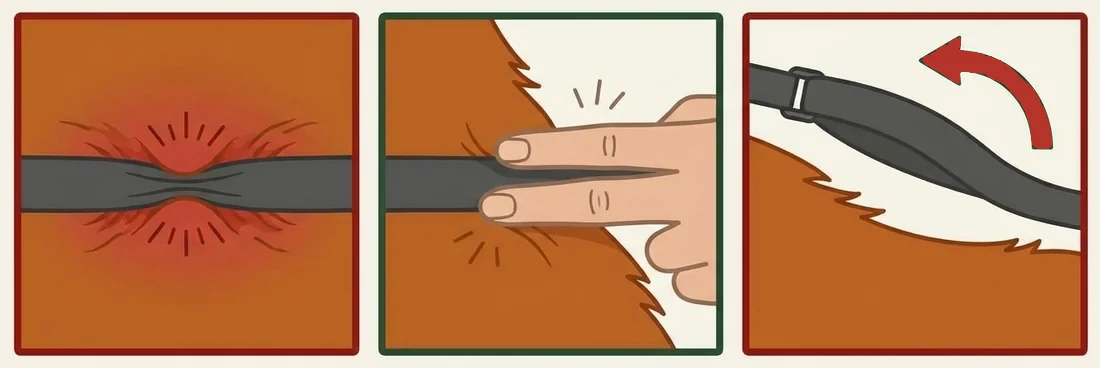
You need a soft tailor's tape, not the metal DIY kind: metal does not follow the chest and will read short. Measure with the dog standing, not sitting or lying down, and without pulling the tape tight: two fingers should slide underneath.
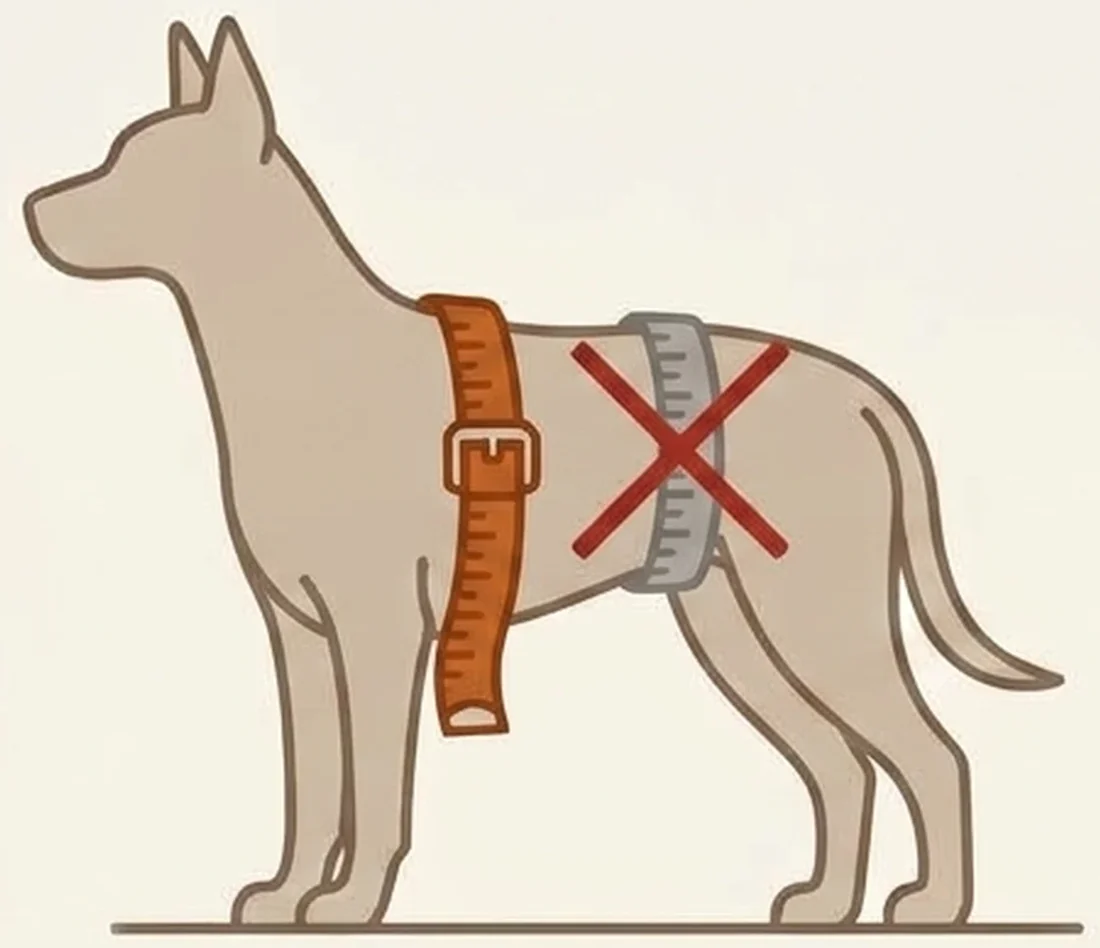
Chest girth — the measurement that decides
Go all the way round the ribcage at its widest point, which is just behind the front legs. It is the measurement almost every manufacturer uses to define the size, and the one most people get wrong by measuring too far back, around the belly.
Neck girth
At the base of the neck, where a collar would sit — not up near the head. In narrow-headed dogs such as greyhounds, podencos and whippets this measurement is critical: if the neck is wider than the head, the dog can back out of it.

Three mistakes that cost money
- Measuring over long coat and not allowing for it. On a dense-coated dog the tape reads up to 4 cm too big. Part the coat and measure against the skin.
- Going by weight instead of girth. Two 20 kg dogs can differ by 15 cm around the chest. Weight is a hint; the tape decides.
- Sizing down when you are between two. Always go up: every one of these harnesses has adjustment points to tighten, none can be made bigger. A tight harness is what causes chafing in the armpit.
My dog is between two sizes, which do I order?
The bigger one, no hesitation. All of these harnesses have several adjustment points to tighten, none of them can be enlarged. A tight harness is what chafes the armpit.
Why are some brands missing from the result?
Because they do not publish the range in centimetres on their Amazon listing. We could estimate it, but an estimated size ends in a return or a dog that slips out. We would rather tell you.
Does this guide work for a puppy?
It does, but measure again every month. A medium-breed puppy changes size two or three times before its first birthday, and a harness that has got too small presses exactly where it does most harm.