A poorly fitted harness loses much of its anti-pull effect — and can chafe or be loose enough for the dog to escape. Here's the step-by-step process.
Before you start: measure your dog
With a tape measure, measure: Neck circumference — where a regular collar would sit. Chest circumference — the widest point, just behind the front legs. Compare with the manufacturer's size chart. Don't rely on breed alone — there's a lot of individual variation.
Step by step
- Open all buckles before approaching your dog, so you're not fighting clasps while trying to fit it.
- Slip the neck strap over the dog's head, leaving the padded chest piece facing you.
- Pull up the leg straps one at a time, adjusting the padded sleeves at the armpits.
- Close the side buckles and tighten the body straps until snug.
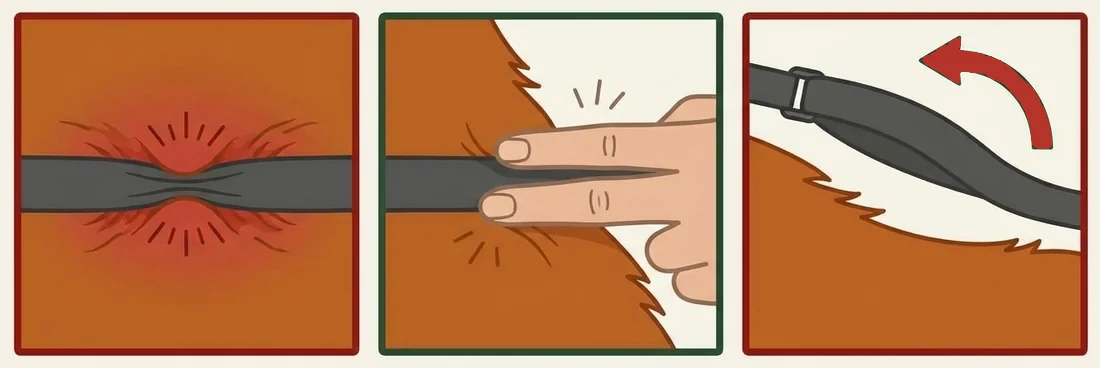
- Check with the two-finger rule: you should be able to fit exactly two fingers between the harness and the dog's body, no more, no less.
Signs of a poor fit
- Too loose: the dog can pull a leg out or back out of it
- Too tight: chafes, leaves fur marks, or the dog resists moving normally
- Off-center: check that straps are symmetrical on both sides
The first time can be tricky: it's normal for the dog to resist initially. Pair it with treats and let it sniff the harness first — most dogs accept it without issue within days.
FAQ
How often should I check the fit?
Every few weeks, especially in growing puppies, and whenever you notice the dog moving more than usual inside the harness.
Can I leave the harness on all day?
Not recommended — take it off when you get home to prevent prolonged chafing and let the skin breathe.