
The leash itself doesn't stop your dog from pulling — that's the job of the harness or collar it's attached to. But a poorly chosen leash can cancel out the whole effect: too long or too stiff, and you'll still feel every jolt in your wrist.
What to look for in an anti-pull leash
- Medium length (1.2–1.8m): enough movement without losing control
- Double clip: lets you use either the chest or back ring depending on the situation
- Elasticity or shock absorption: cushions sudden jolts without it showing as much on your arm
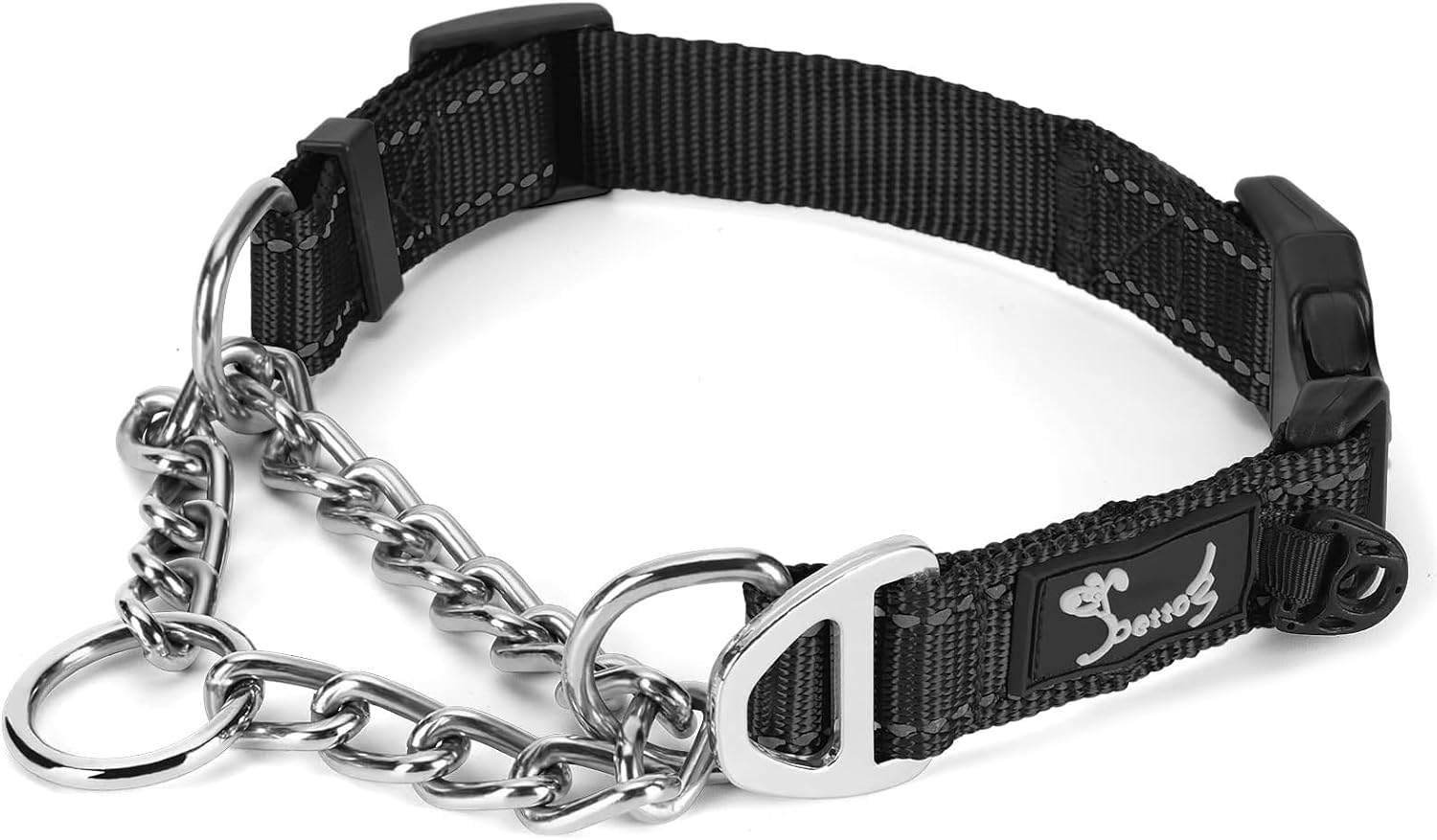
Edipets Double 360° Anti-Pull Leash
360° rotation to avoid tangles, reflective stitching, padded handle. Valid as a single or double leash for two dogs at once.
✓ Pros
- 360° rotation avoids tangles in active walks
- Reflective stitching for night walks
- Valid for one or two dogs
— Cons
- For very large dogs, consider the elastic version for more shock absorption
- The double version can be awkward with very different-sized dogs
Remember
For anti-pull training, always use a fixed leash. Retractable (flexi-type) leashes give the dog the feeling that pulling works because the leash gives — exactly the opposite of what you want.
FAQ
Does an anti-pull leash work without a harness?
Not on its own. The leash is the complement, but the real control comes from where it attaches on the harness or collar.
Fixed or retractable leash — which is better?
For anti-pull training, always fixed. Retractable leashes encourage the dog to pull more because the leash gives way.